After our brief coverage of Oyster testing and Quartz service/theory, we moved on to the largest section of the program: mechanical movement servicing and theory. This section alone was a significant motivator for me. I could take apart a movement and put it back together, but I didn’t have a clue on how it worked and why. I couldn’t tell good practices from bad habits, couldn’t explain how power flows through the watch or how to troubleshoot function check failures. I would learn it all here. Tim was very thorough and worked his way through each section and helped us connect each new piece of info to the last, from intro to movements to hairsprings to checking and adjusting endshakes and more. This would be the most important section we would cover, and I was very excited to dive in.
Hairsprings were a somewhat large hurdle for me as this was (to me) the most watchmaker-y thing we had done up to this point. It’s one of those things that is deceptively simple, to the point of there not being much to it other than simply doing it until you get the results you want. Brock and Johnny were great resources for me, as Johnny’s weekend class helped me understand how to read timing tickets to find poise errors and Brock’s hairspring adjustment methods made the task finally click for me.
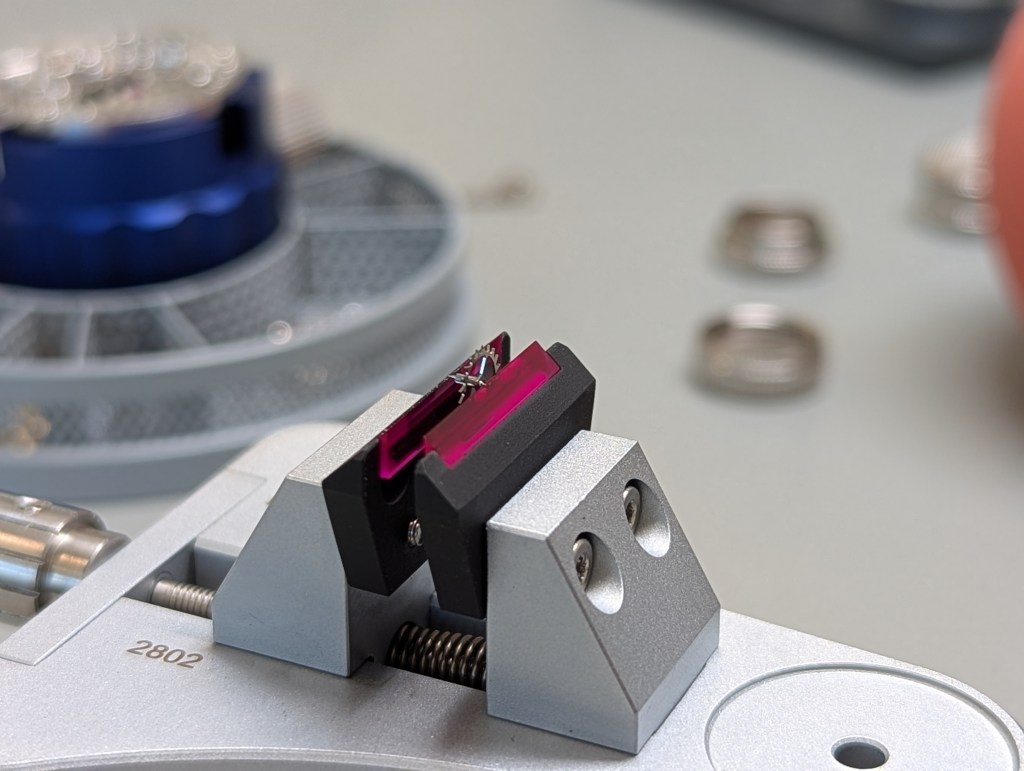
Introducing the poising tool, used to poise balance wheels. Think of balancing tires after getting the replaced! 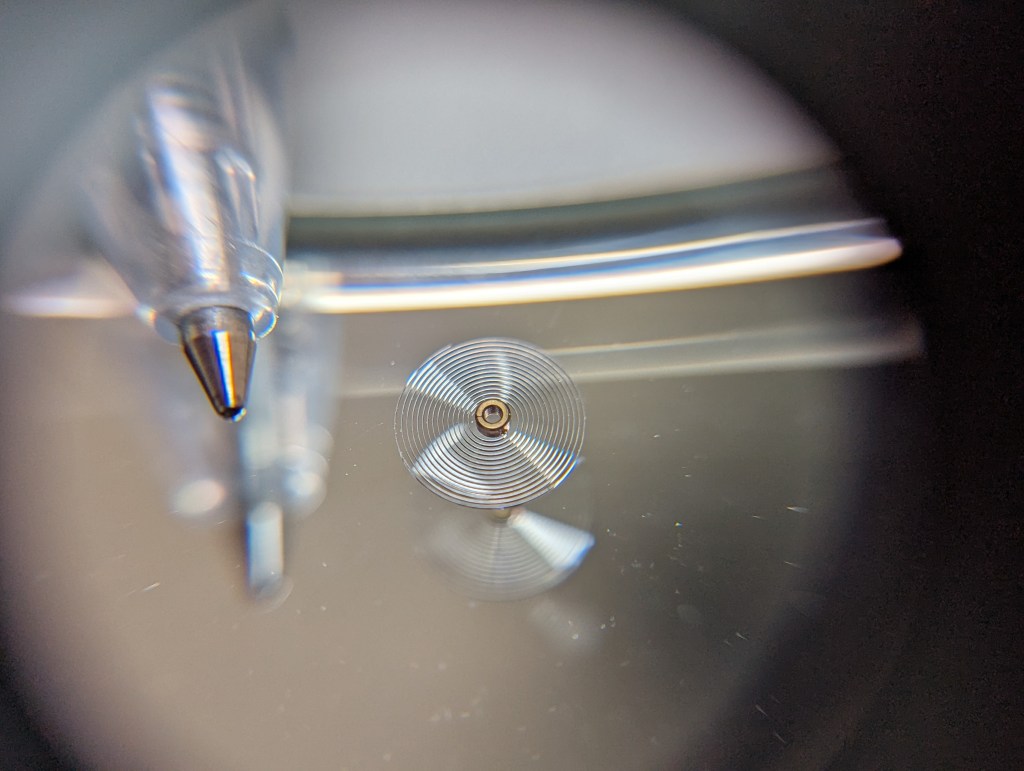
Introduction to hairsprings and bending them. Compare the size of the ballpoint pen to the hairspring. The hairspring is a very small, yet important component that must be perfectly centered and flat to ensure precision. 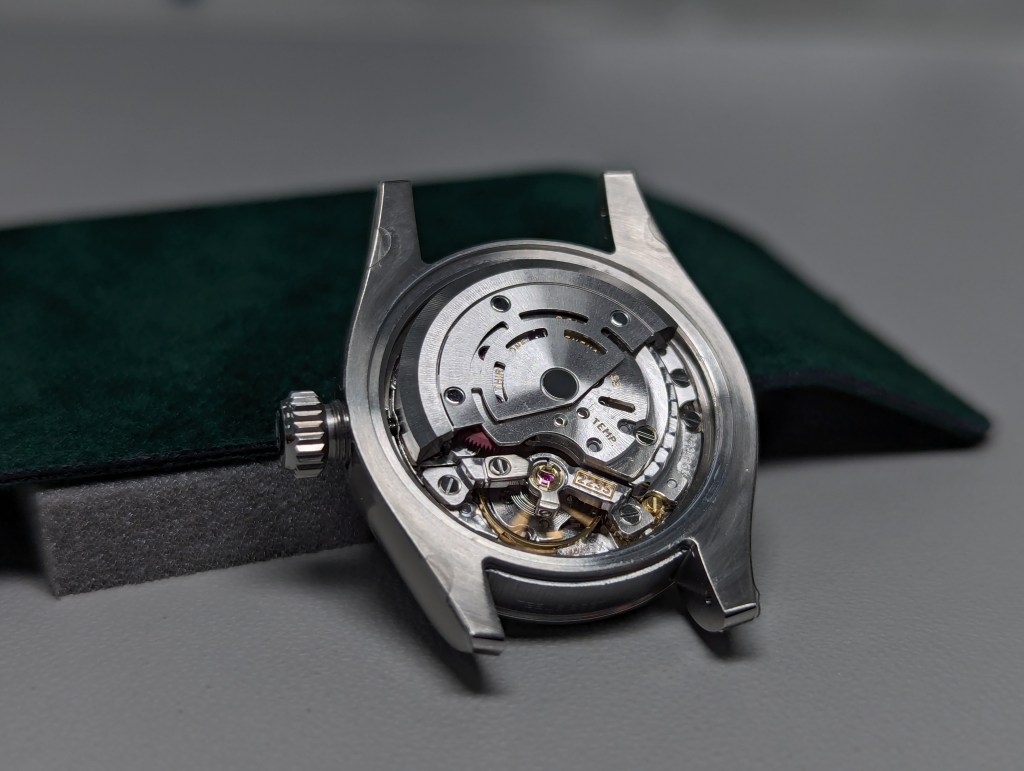
A completely serviced watch waiting for the case back to be applied and tightened before Oyster tests.
We worked diligently on our techniques and workflows in preparation for our Geneva audit in May, which was an 8-hour movement servicing exam conducted by proctors from Geneva. This audit was to check on what we were learning and how well it was being absorbed and put into practice by us students, which actually made it more of an audit of our instructors than one for us. However, that did not make the test any less nerve-wracking. Our class did our best to work together and make sure we all got our movements cleaned as efficiently as possible and did the best work we could up to that point. I performed very well and earned the highest score in all of Cohort 1! I was very proud of my work, as was Tim and the rest of the instructors.
This section of audit/IE3 prep helped me learn how to ask for help easier. I’ve always been quite self-sufficient and prefer to handle difficult or stressful things on my own. When it came to hairsprings, I felt less of a hurdle or even shame when asking for assistance, partly due to how many others were in the same boat and how willing the instructors were to help us understand such a new process. I’ll always be grateful to them for this since it helped me get over myself and put my education first!
 Rolex Watchmaking Training Program, Class of 2026
Leave a comment